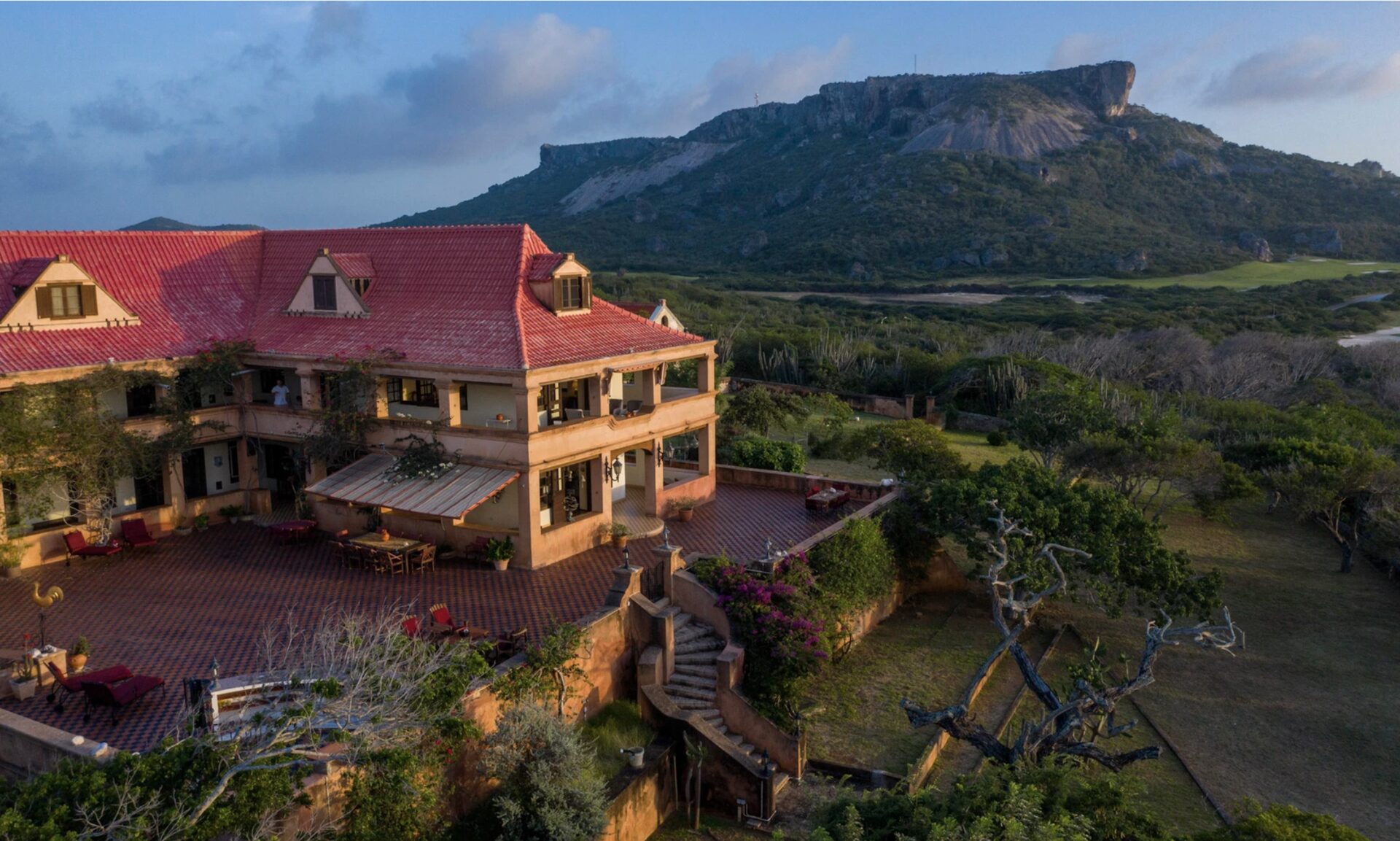
A private estate where an 18-hole Pete Dye golf course, two full-service marinas, a neighborhood table, and five centuries of history all meet the same protected water.
Long before it bore the name Santa Barbara, this shore was sacred. The Caquetío anchored their canoes in the sheltered water. The first Spanish chapel on Curaçao rose from this same ground. Centuries of landhuizen life unfolded here. Today, that same water shelters a marina full of sailboats and a golf course that plays along its rocky edge — and at Bar Boca, the Club's neighborhood table, people still gather at sunset the way this place always has.
Five hundred years of Caribbean history converge on this single shore. What follows is drawn from the historical record — Castellanos's 16th-century account, and Hartog's History of the Netherlands Antilles.
Curaçao was inhabited by the Caquetío — an Arawak-Maipure tribe from the coast of present-day Venezuela. They lived close to the sheltered bays, drawing water from hand-dug wells and fishing the inland sea.
The Spanish navigator Alonso de Ojeda, sailing with Amerigo Vespucci, made landfall on Curaçao. Vespucci's letter of 1499 left the first written European record of the island.
Juan de Ampues, the Spanish administrator, founded Santa Barbara as the centre of administration for the island and erected the first chapel on Curaçao here — a stone building with a wooden roof. A drawing of the chapel from 1540 still survives.
The Dutch West India Company seized Curaçao from Spain. When they landed, they found Santa Barbara already cultivated with orange trees, lemon bushes, and pomegranates — conveyed there by the Spaniards.
Through the 18th century, Curaçao's landhuizen defined its landscape. The Santa Barbara estate took shape as one of the island's most significant holdings, its great house rising from the limestone hills.
Under the Gorsira family, the mouth of Fuik Bay was widened and a wharf was built along Spanish Water. The natural harbour at Santa Barbara took its place among the working waters of the Caribbean.
Five centuries after Ampues raised the first chapel on this shore, Santa Barbara is a working club — an 18-hole Pete Dye golf course, two full-service marinas, a neighborhood table at Bar Boca, and Marina Village, its first residential offering.
Every amenity at Santa Barbara sits on the same protected water — golf that plays along the coastline, a marina full of sailboats, a beach at the mangrove's edge, a neighborhood table, the estate house that started it all, and miles of trails across the land between.
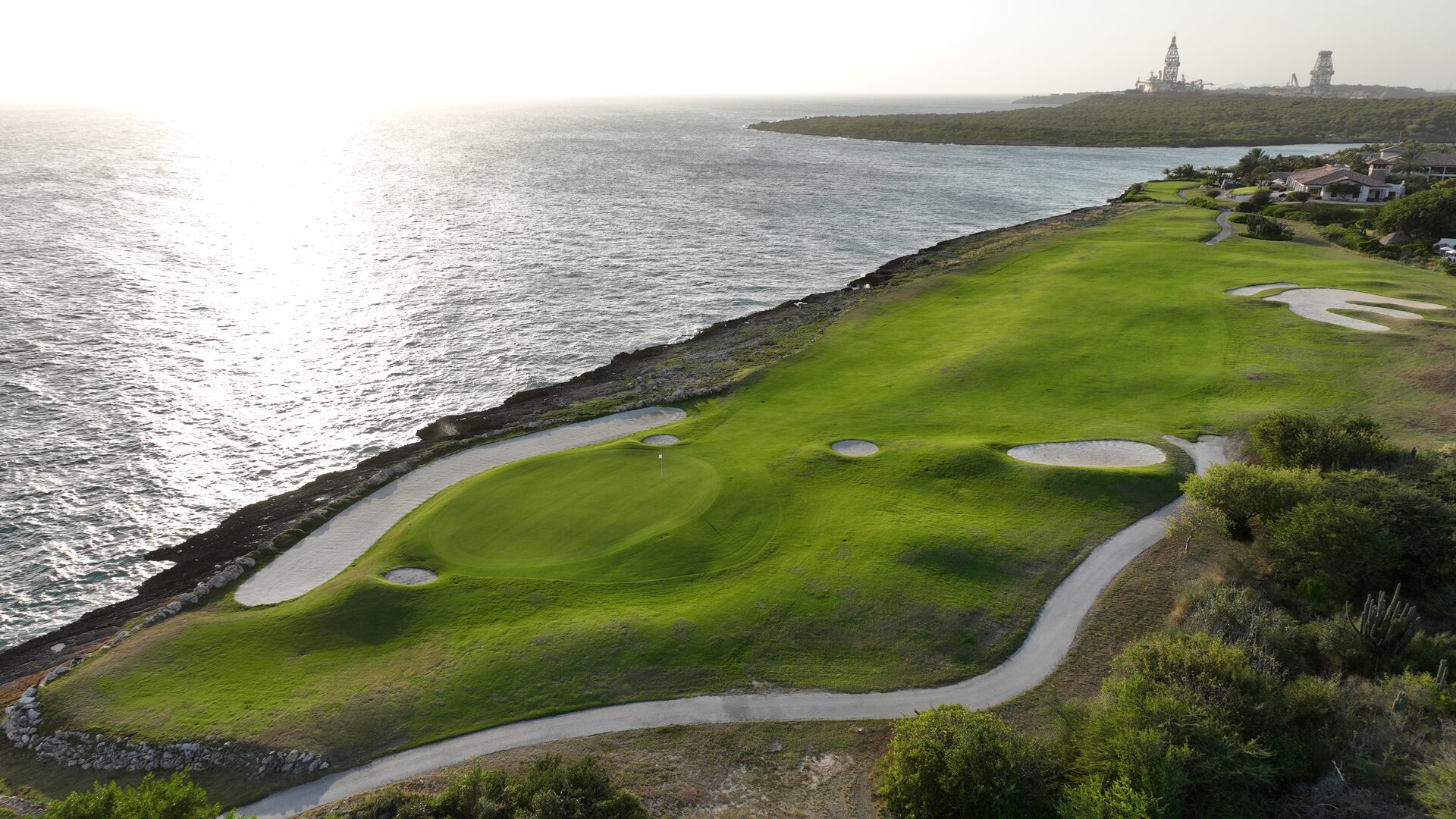
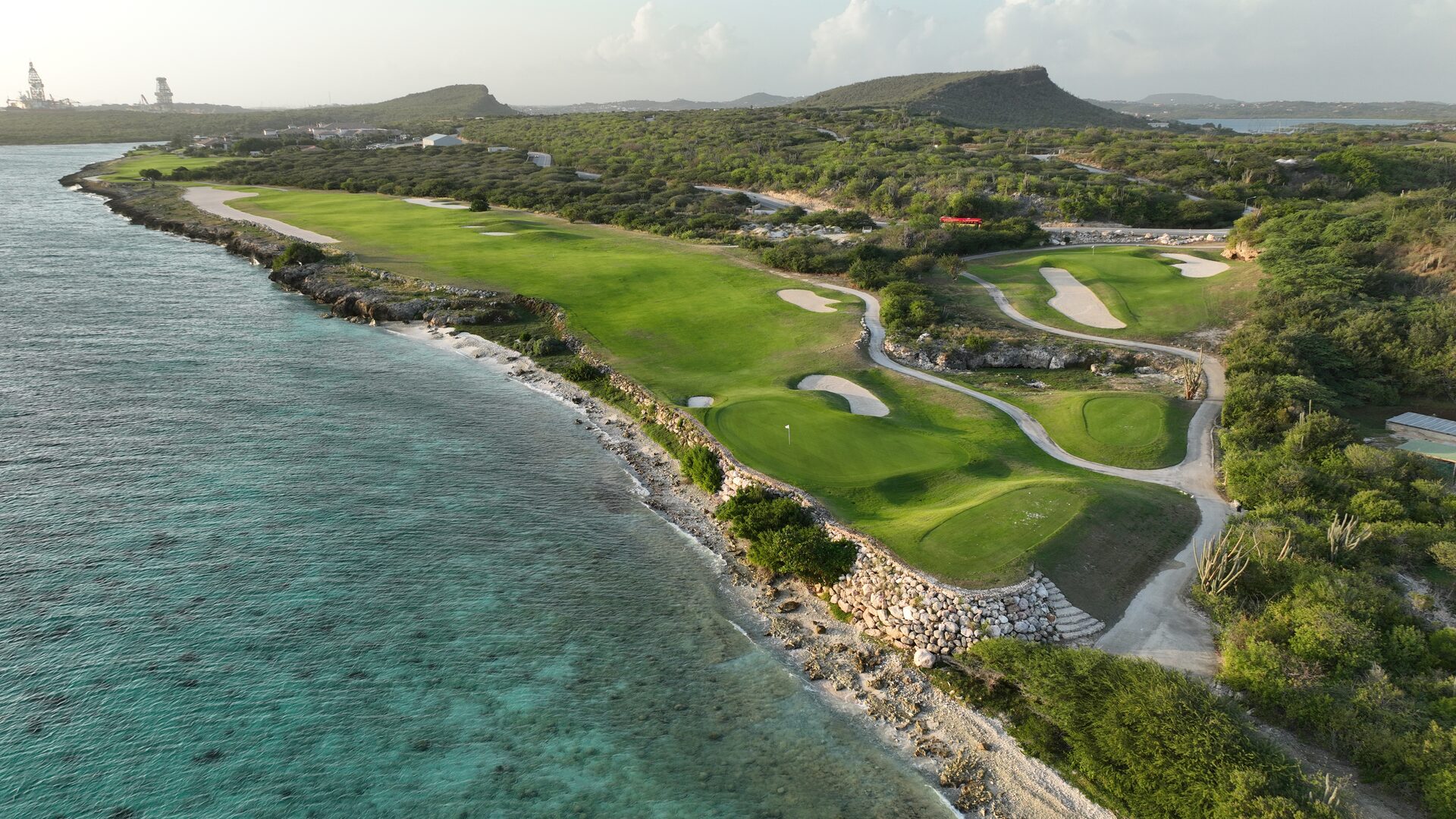
Santa Barbara's golf course is a rare Caribbean signature from Pete Dye — one of the most influential designers in the sport's history. Holes play directly along the rocky coastline, with greens perched at the water's edge and fairways that wind between limestone outcrops and the mangrove-lined shore of Spanish Water.
The course rewards precision over power: free-form white sand bunkering, ocean crosswinds, and greens that fall away toward the Caribbean Sea on more than one hole.


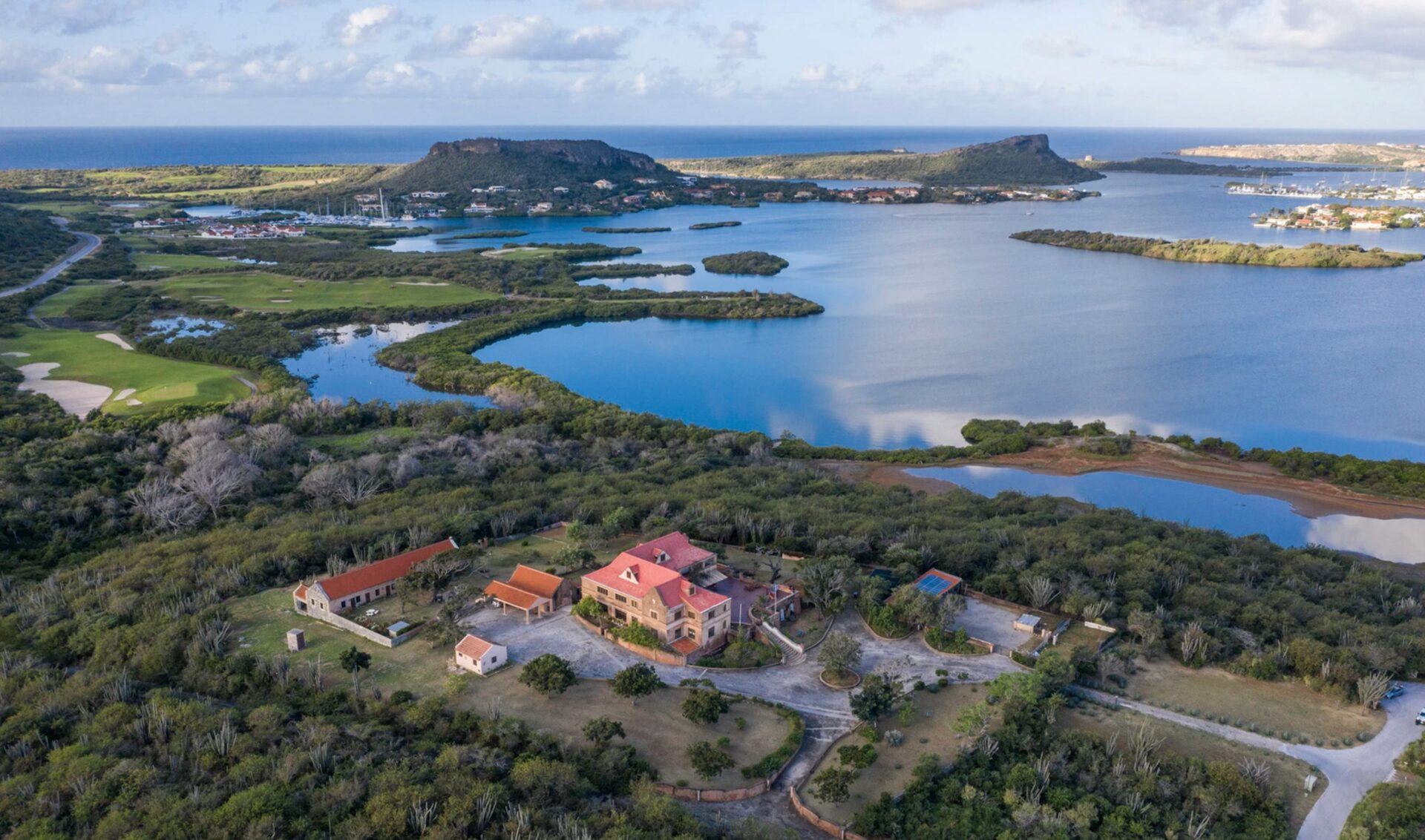
Since the Dutch first widened this passage in the 17th century, Spanish Water has sheltered boats from the open Caribbean. Today Santa Barbara offers two full-service marinas with slips for sail and motor yachts alike, framed by mangrove islands and the fairways that wrap around the basin.
The second marina sits beside Bar Boca and is home to a customs, immigration, and coast guard station — making it a natural port of entry for boats arriving from abroad. It's a short walk from either marina's docks to the clubhouse, the golf course, and Bar Boca — everything within reach of where the boats are tied up.
A protected, shallow-water beach gives members a place to swim without the surf of the open coastline — shaded loungers, palm cover, and a lagoon-clear entry into the water that makes it a natural gathering spot for families.
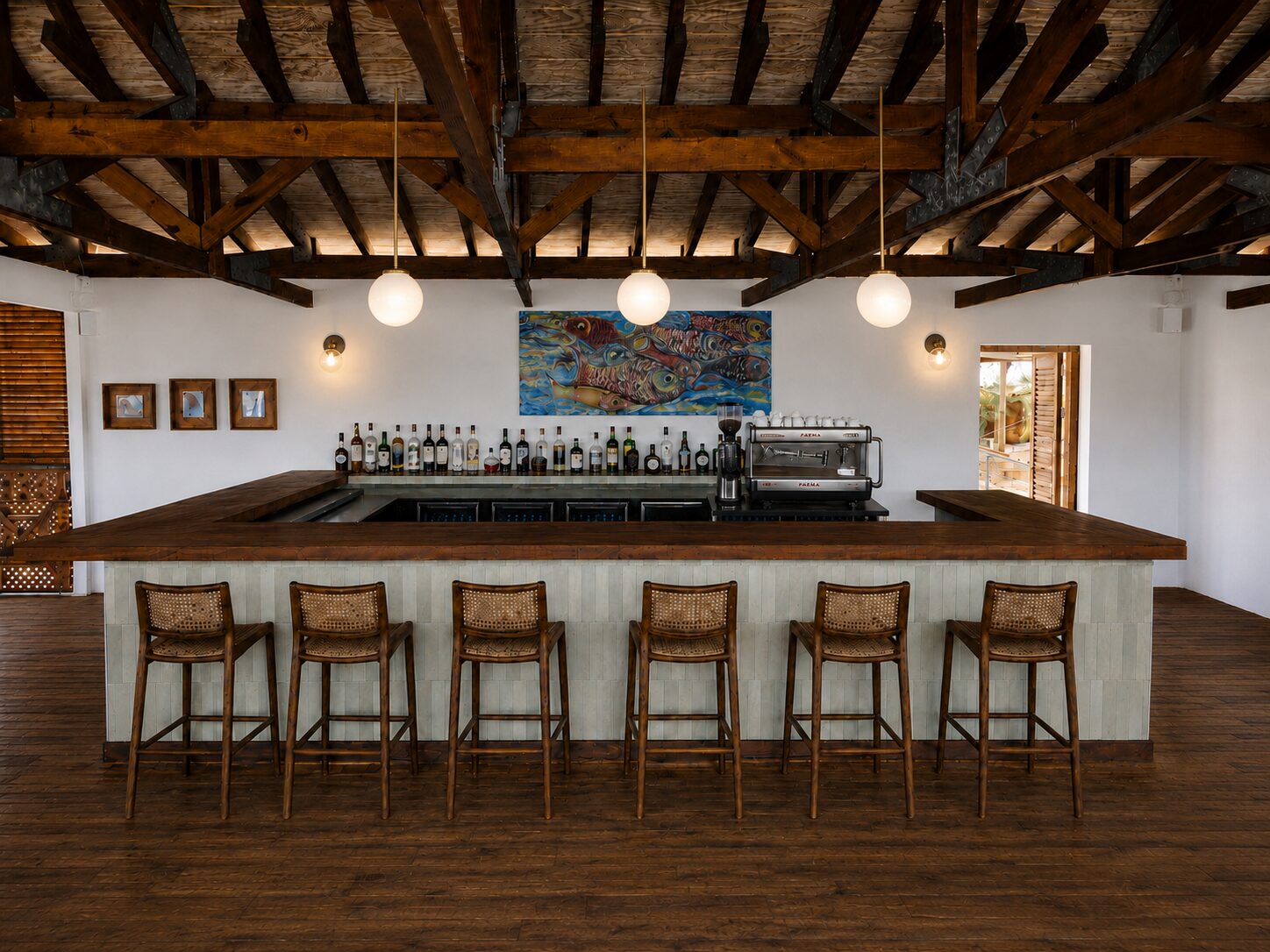
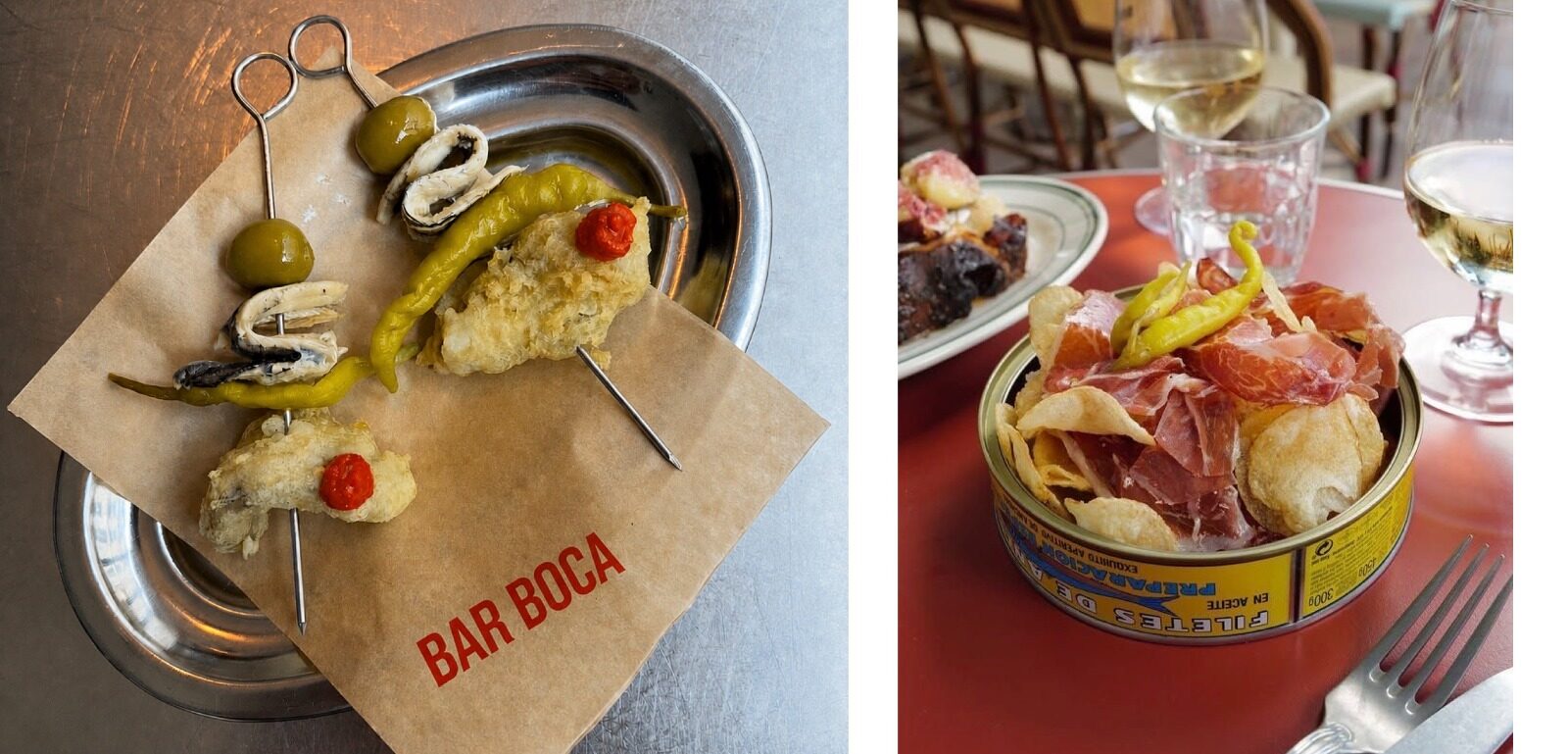
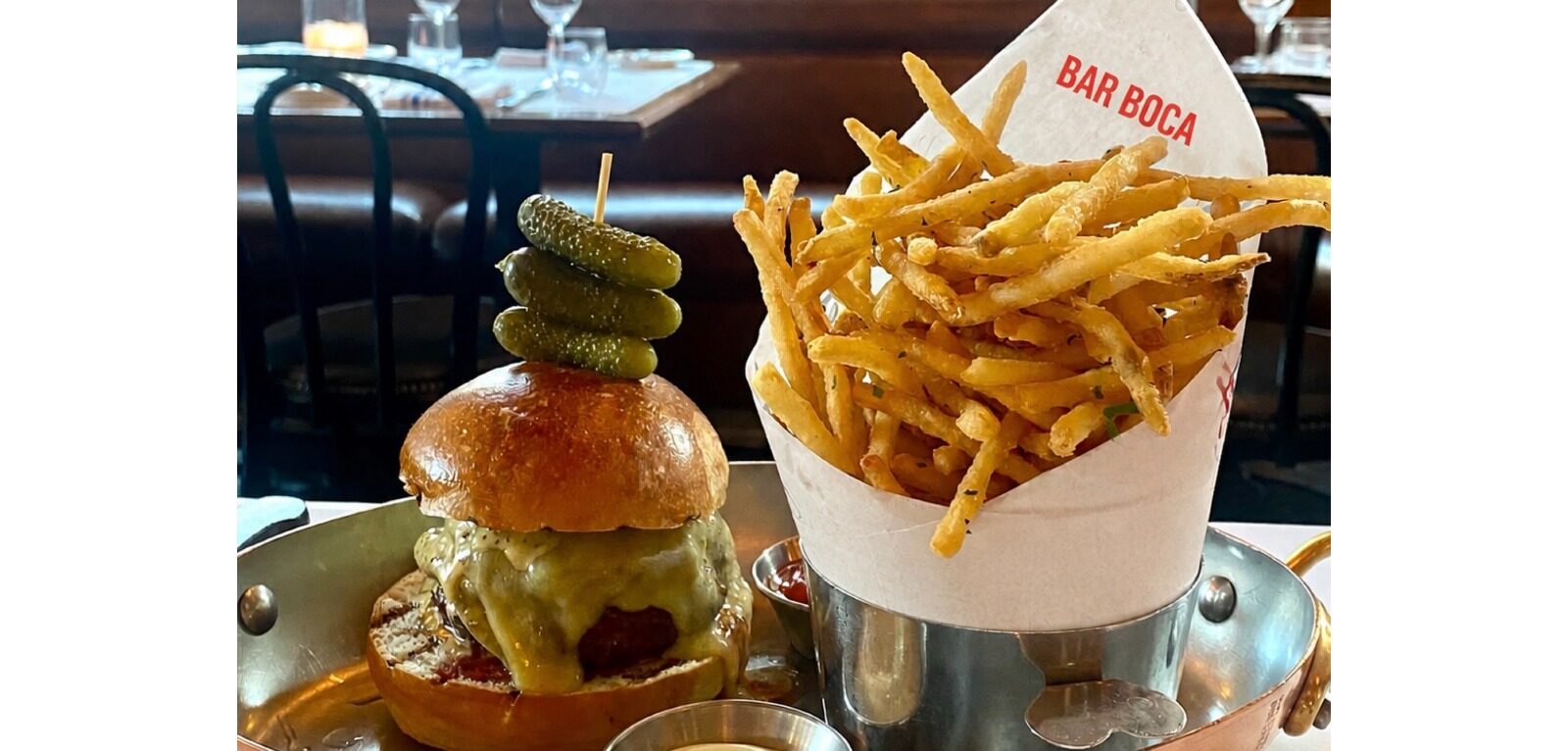
Bar Boca is the contemporary evolution of Boca 19 — a modern neighborhood bar where food, drinks, music, and atmosphere come together. The feeling is warm, energetic, slightly nostalgic, and effortlessly cool.
Service here feels like a host welcoming you into a favorite local spot, not a formal restaurant — the kind of place where the staff know your usual before you sit down.


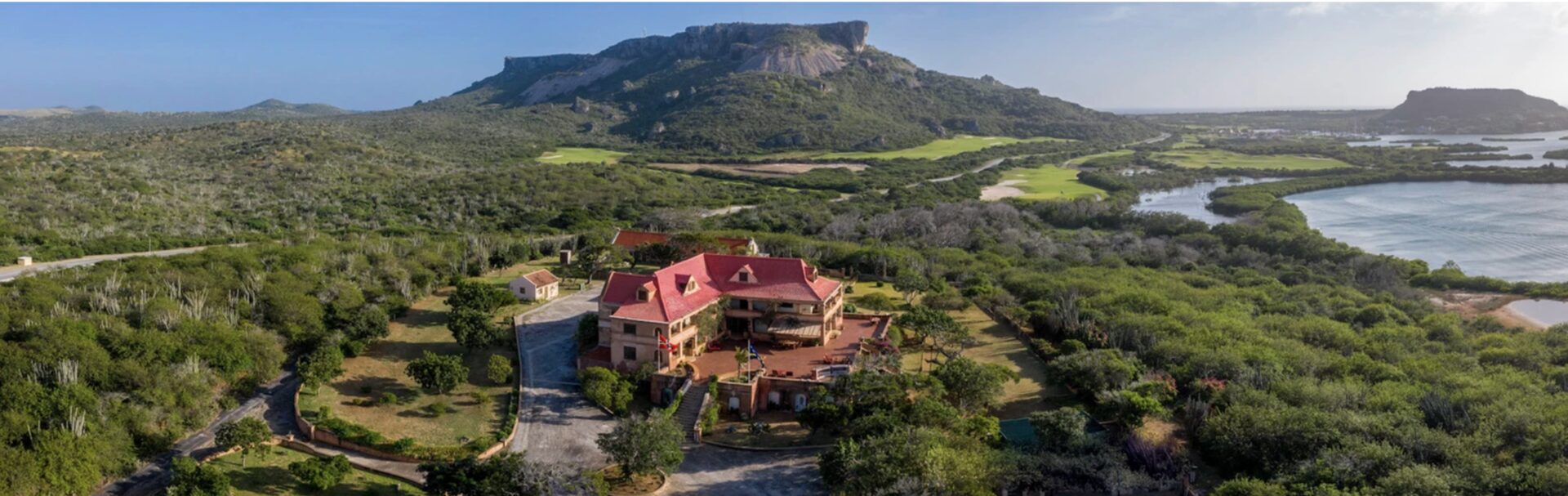
The estate house that gave Santa Barbara its name still stands — a red-roofed landhuis set above Spanish Water, with sweeping views to Tafelberg and the golf course fairways below. Built in the landhuizen era and expanded since, it remains the most historically significant structure on the property.
Plans call for the Landhuis to reopen as a private members club: a checkered-tile terrace bar for sunset, dining rooms inside the original stone walls, and a place for the Club's history to be lived in daily, not just remembered.


Beyond the golf course and the marinas, Santa Barbara's undeveloped land is laced with hiking and biking trails that wind past the mangroves of Spanish Water, up through Tafelberg's rugged high ground, and out to lookout points along the coast — Bulado Beach, East Point, and Pelican Creek among them.
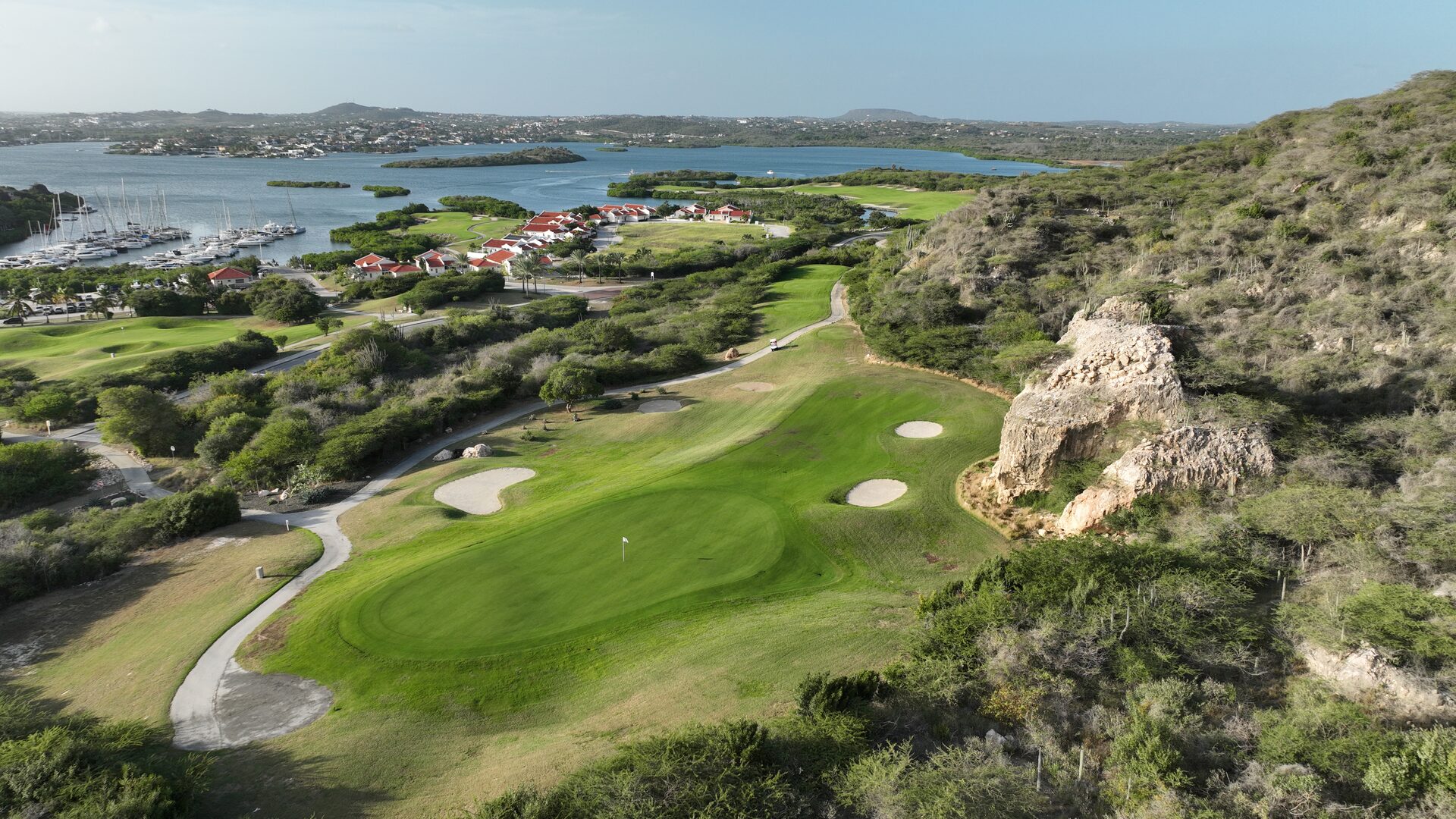
Birdwatchers gather along the water's edge near the estate entrance, where herons and pelicans work the shallows, while the limestone face of Tafelberg draws climbers for routes with sheer drops to the sea — the same cliffs pictured here, looking straight down over Marina Village and Spanish Water.
The Club's first residential offering — 12 exclusive residences across four villas, designed by Hart Howerton, set on the most private grounds at Santa Barbara.
Marina Village residents step directly into Club life — golf, marina, Bar Boca, and beach access, all within a walk of home.
Site Plan — Unit Breakdown
Community Map
609 m² / 6,556 SF across three residences, closest to the marina docks — two garden-level units and one upper unit.
Units 1 & 2 — Garden Floor Plan
Unit 3 — Upper Floor Plan
609 m² / 6,556 SF across three residences — two garden-level units and one upper unit, matching Villa A and C.
Units 1 & 2 — Garden Floor Plan
Unit 3 — Upper Floor Plan
609 m² / 6,556 SF across three residences — two garden-level units and one upper unit, matching Villa A and B.
Units 1 & 2 — Garden Floor Plan
Unit 3 — Upper Floor Plan
725 m² / 7,803 SF — the largest of the four villas, set apart on the most private grounds at Marina Village with a garden unit and two duplex residences.
Garden & Duplex Units — Floor Plan
Flagship Duplex — Floor Plan
Santa Barbara sits along the edge of Spanish Water — the same sheltered inland sea that drew the Caquetío, the Spaniards, and the Dutch before it drew golfers, boaters, and members today.
Twenty minutes from Willemstad. Twenty-five from Hato International Airport. A world away from either.
Whether you're interested in Club membership or one of the twelve residences at Marina Village, our team is here to help.
The Santa Barbara Club welcomes new members with access to the golf course, marina, beach, and Bar Boca. Reach out to learn about membership categories and availability.
We've received your inquiry and will be in touch shortly.